The Qualifications Framework for Higher Education (see more here) divides student learning outcomes into three main categories: knowledge, skills and competencies. The learning outcomes must indicate the knowledge, skills and competencies acquired by graduates as a result of a learning process in which the programme’s course elements have been completed with fulfilment of the stated objectives in the final exams.
KnowledgeSpecifies certain knowledge of a field, the level of knowledge and the understanding acquired. Knowledge includes: Type of knowledge: For instance knowledge about theory, practice, a field of study, a profession or a method. Complexity of the knowledge: How complex is the knowledge, and in which different and unpredictable situations and contexts must the student be able to apply the knowledge?
|
SkillsSpecifies what students are able to do or carry out: Skills include: Type of skills: For instance practical, theoretical, cognitive, creative or communicative skills. Complexity of the skill: What degree of mastery is expected, and to what type of task performance is the skill to be applied?
|
CompetenciesSpecifies the ability to apply knowledge and skills in a work situation or study context. Competencies are about responsibility and independence and include: Type of context: In what types of work and/or study-related contexts are knowledge and skills brought into play? Complexity of competency: To which extent should knowledge and skills be used in these contexts? And how unpredictable and changeable are these contexts?
|
Academic objectives, also called intended learning outcomes or qualification descriptions, describe the knowledge, skills and competencies that the student will be able to acquire through doing the course element. Likewise, the academic objectives also form the basis for the exam in the course element. The academic objectives are defined based on the objectives of the course. The academic objectives will always reflect a conscious choice and do not necessarily reflect the overall purpose of the course. But even so, the academic objectives are still important. Firstly because they form the basis for the final assessment, cf. the Examination Order, and secondly because they provide the clearest insight into what the student must do to fulfil the course objectives. And finally, clear academic objectives create a sound basis for peer feedback.
It may be relevant to distinguish between the academic objectives for the course elements and the criteria that form the basis for assessment in the course exam, also referred to as assessment criteria according to the Examination Order. If there are differences between the academic objectives and the goal descriptions, it is essential to explain any such differences in the academic regulations.
When describing the academic objectives, it is essential to keep this distinction in mind, as it makes it clear to students, lecturers and examiners/co-examiners what should be included in the assessment of the degree of fulfilment of the objectives. The goal descriptions serve as a yardstick making it possible to assess the extent to which the students fulfil the academic objectives. Moreover, they create a sound foundation for criteria-based, formative assessments during the course.
In other words, the goal descriptions must set out how the degree of fulfilment is assessed, i.e. what counts towards fulfilment of the academic objectives and what contributes, either positively or negatively, to the assessment of the quality of the student’s performance.
Here are some examples of what fulfilment of the academic objectives normally requires:
The academic objectives can be drawn up based on the following four recommendations:
1. Identify the qualifications that are key to the course objectives.A large number of academic objectives and a great amount of detail are not sufficient in themselves to ensure a completely satisfactory exam process and a completely clear basis for assessment. The selected goal descriptions should be evaluated critically in terms of how they relate to the academic objectives. Try to identify 6–8 academic objectives for each course. 2. Consider the academic objectives in terms of knowledge, skills and competencies.This does not mean that each and every course must always contain all three categories of academic objectives, but it will help to ensure that all three categories are discussed. Use the definitions of knowledge, skills and competencies as listed under the Qualification profile for the programme to differentiate between the categories and to develop the academic objectives correctly. 3. Build the academic objectives and the goal descriptions using active verbs, nouns and context descriptions.Active verbs to describe the form and level of performance. It is a good idea to use verbs that are specific enough to serve as a real basis for assessing the student’s performance. For instance, a verb like ‘demonstrate’ says nothing about the taxonomic level required for the performance. This is relevant when it comes to the clarity and transparency of the assessment, and to ensure that the academic objectives can be used to direct the student’s learning process. Nouns to describe the subject area to be covered by the performance. Describe the subject area in as concrete terms as possible without preventing the ongoing development and adaptation of the academic content. It may be a good idea to briefly describe the context in which the relevant qualifications need to be demonstrated. 4. Think about the sequencing of the course on the degree programme.Make sure that the sequencing of the course in the academic regulations is aligned with the academic regulations as a whole, the students’ academic prerequisites and the scope of the course. You should also make sure that there is a clear sense of progression in terms of taxonomic levels, across all courses. If you need inspiration for the drawing-up of academic objectives, you can download a handout below containing an exercise involving five short steps. |
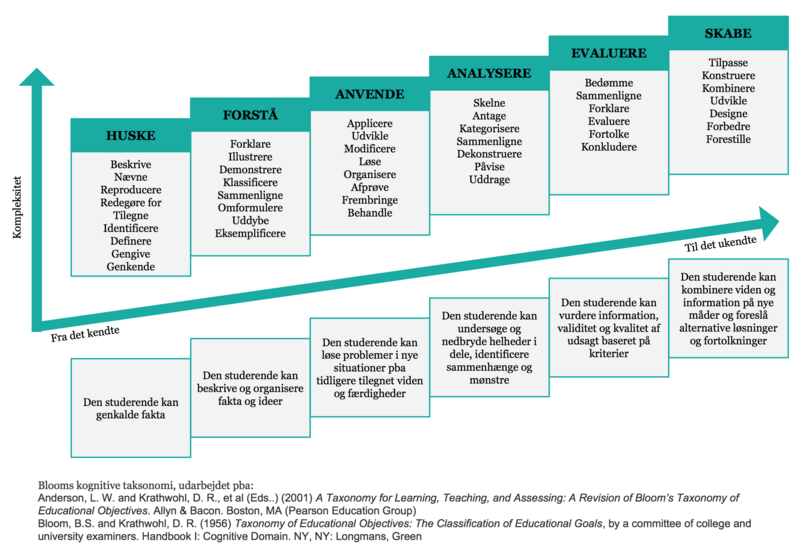
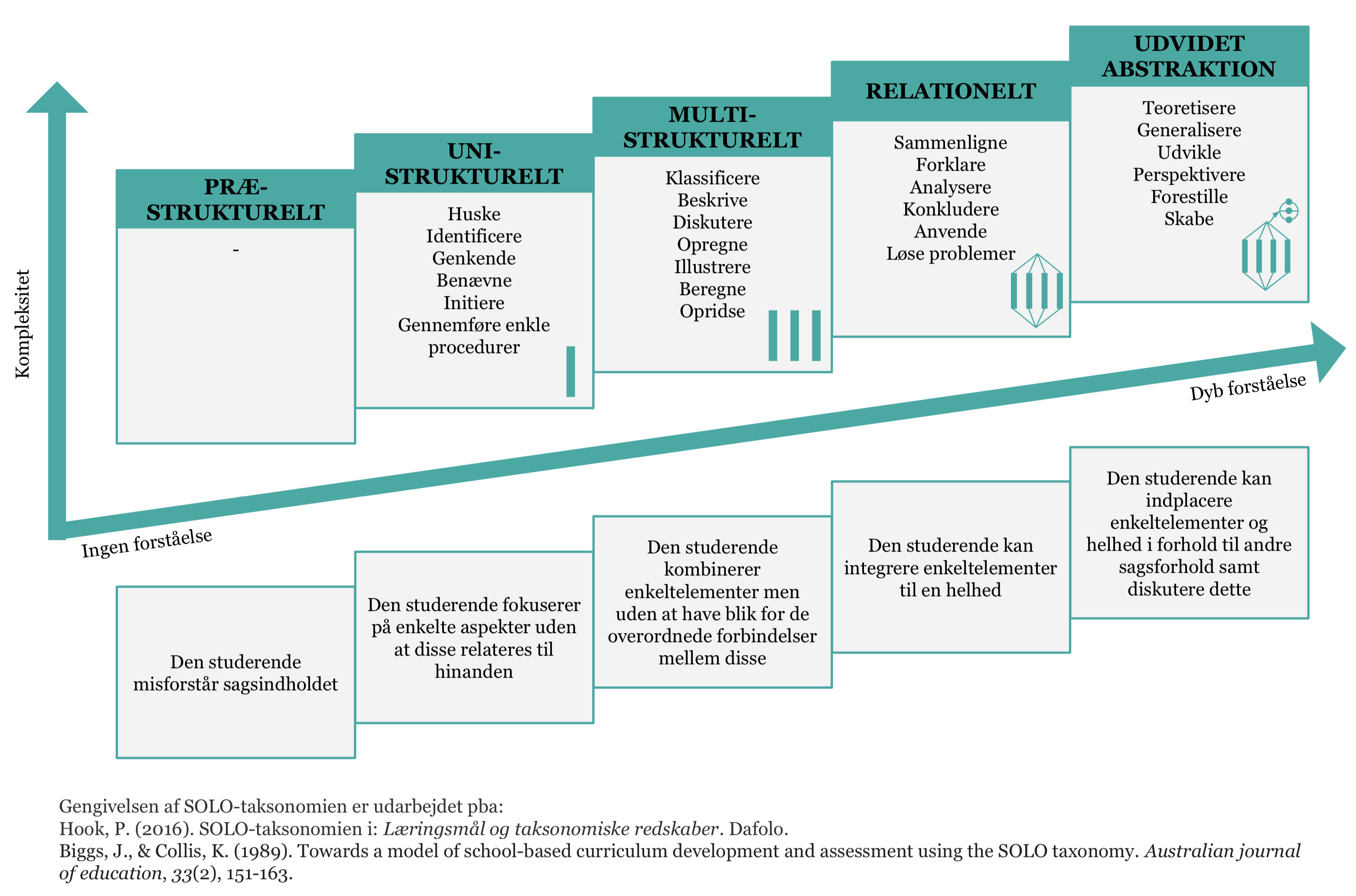
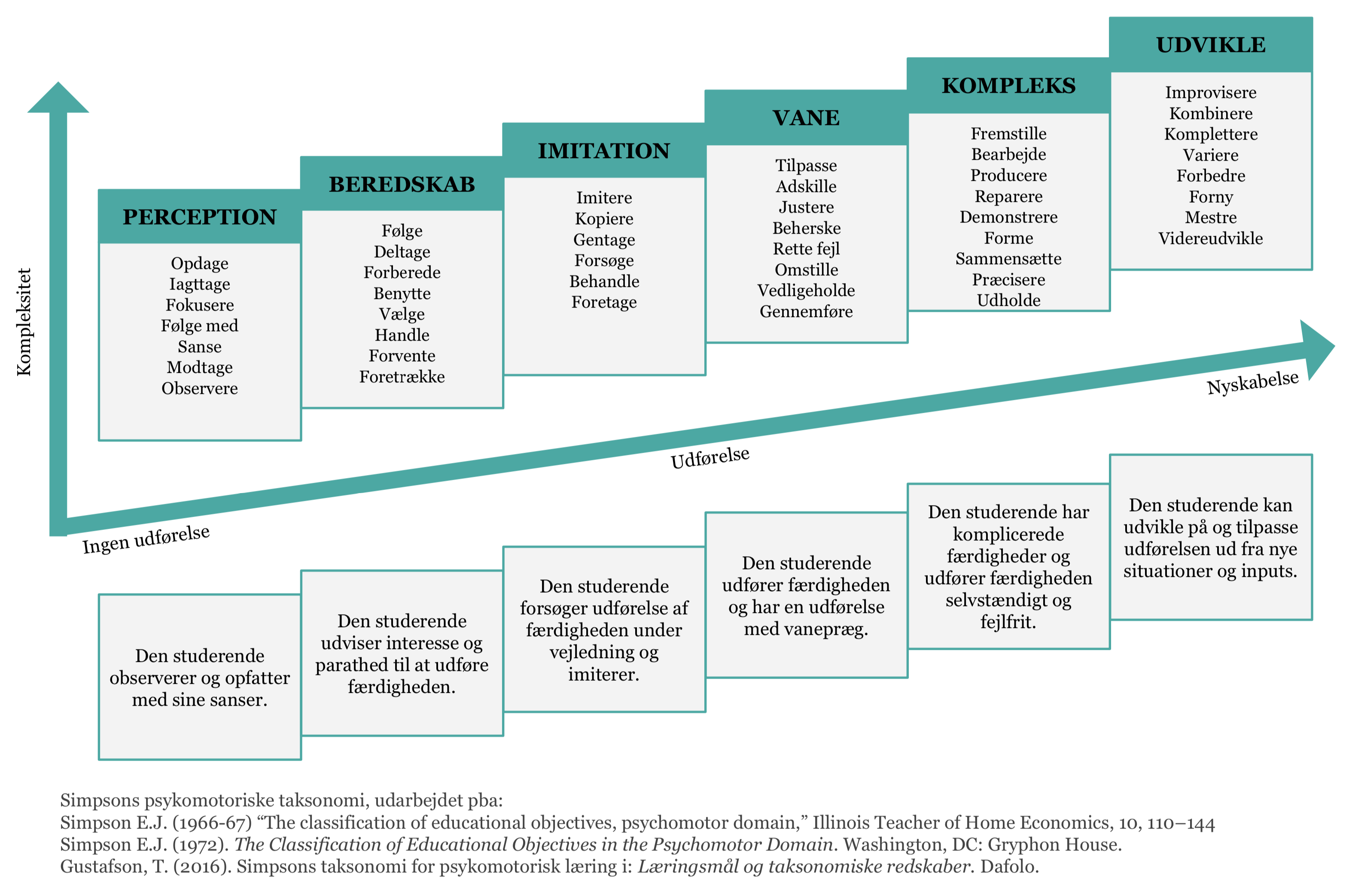
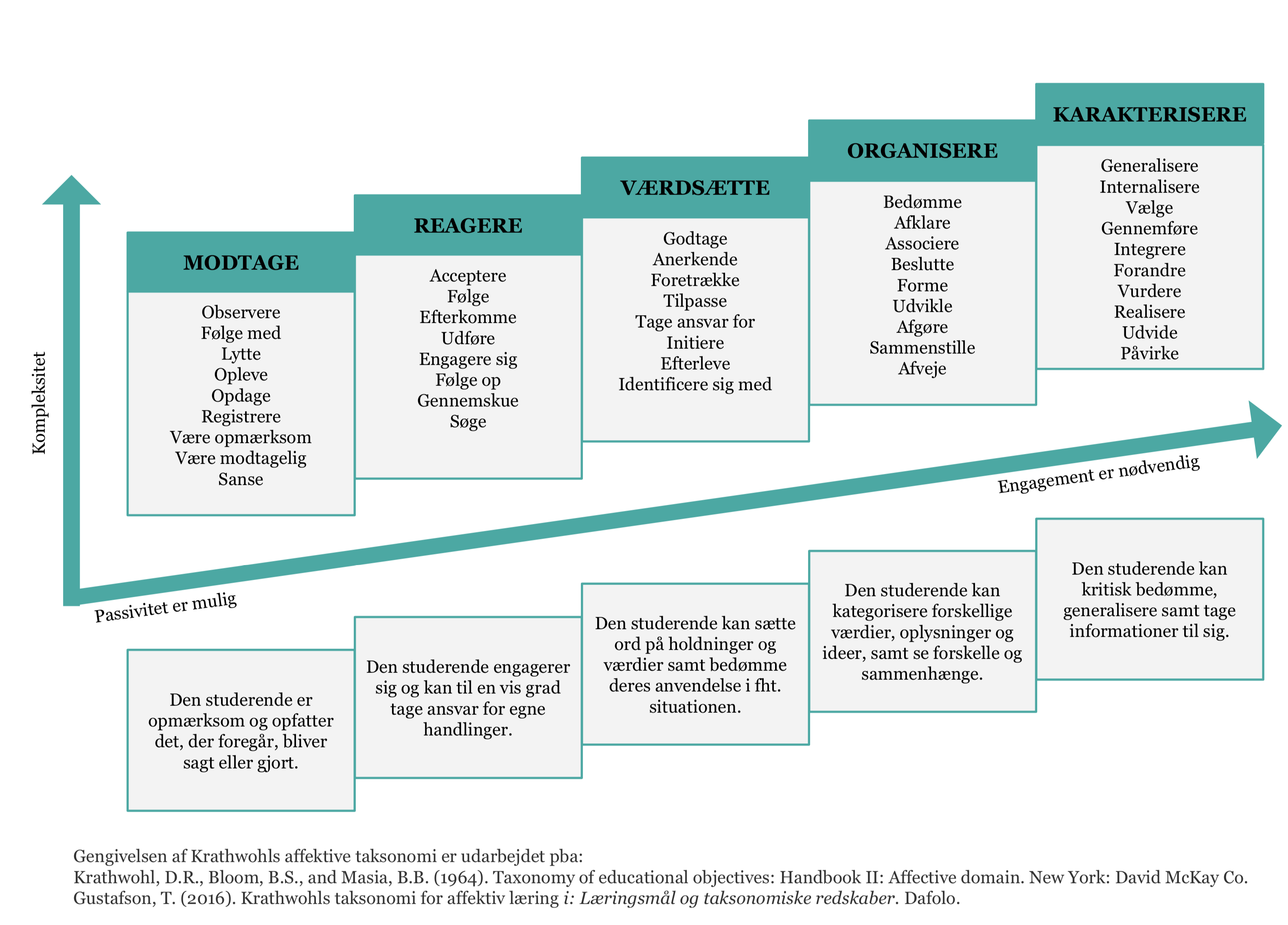
Taxonomic classification can be used to formulate academic objectives and describe students’ knowledge, skills and competencies. Taxonomies for learning can be used to ensure a systematic description of the increasing complexity of student performance and help clarify goals. Depending on what the student needs to demonstrate, for example whether the course aims to promote and test the student’s knowledge (cognitive), actions (psychomotoric) or attitudes (affective), and depending on the subject areas covered by the degree programme concerned, you can draw inspiration from various taxonomies. Below follows a presentation of the taxonomies most commonly used to describe student learning. In addition, CED unfolds the taxonomies and other relevant information on AU Educate.
Bloom’s cognitive taxonomy describes students’ intellectual knowledge, cognitive skills and processes. The taxonomy can be used to assess students’ form of knowledge on six levels, ranging from simple knowledge to more complex knowledge.
Krathwohl’s affective taxonomy describes the students’ development of attitudes and feelings associated with what they are expected to learn. The taxonomy has five levels, ranging from a neutral reaction to stronger and more personal engagement, which is why the taxonomy can be used in contexts related to attitude where the students’ values and personal value-oriented behaviour is to be tested.