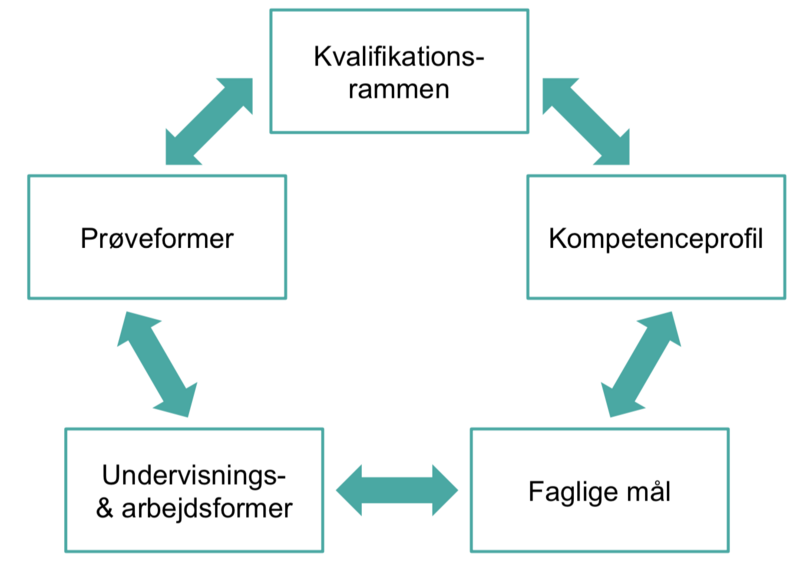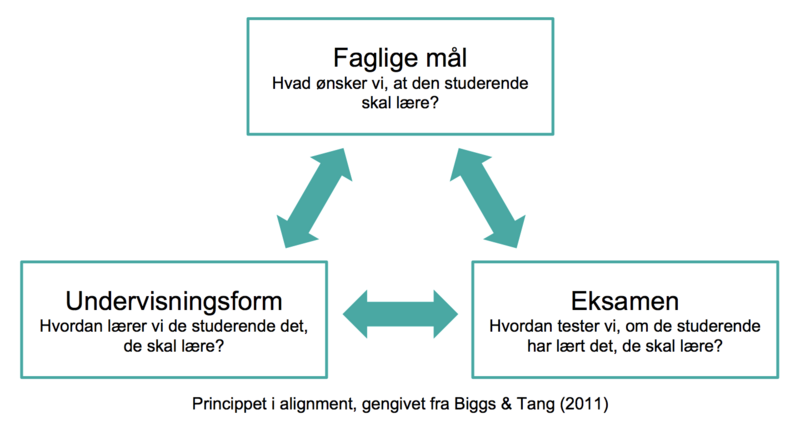
Alignment is about closely attuning the qualification profile of the degree programme, the objectives of the course elements, the academic objectives, the teaching activities and the forms of examination.
To ensure alignment, account must be taken of the following elements:
Alignment is not just a didactic advantage but also a mandatory legal requirement, as revealed by the following extracts from the relevant ministerial orders:
The qualifications framework and the qualification profile of the degree programme must be aligned:
The objectives in terms of learning outcomes are assessed in relation to the type descriptions of each degree programme, as stated in the Qualification Framework for Higher Education. |
Forms of teaching and forms of examination must be closely aligned:
“The examinations and tests in the programme of study shall include a variety of forms reflecting the content of the teaching and the forms of work.” |
The form of examination and the course objectives must be aligned:
“The form of examination must make it possible to test compliance with the objectives of the course or course element concerned.” |
The academic objectives and the form of examination must be aligned:
“The student’s performance at an examination or test shall be assessed on the basis of the academic objectives set for the course element in question.” |